
Top AI Certifications in Europe: What Romanian and EU Job Markets Actually Want
 admin
admin 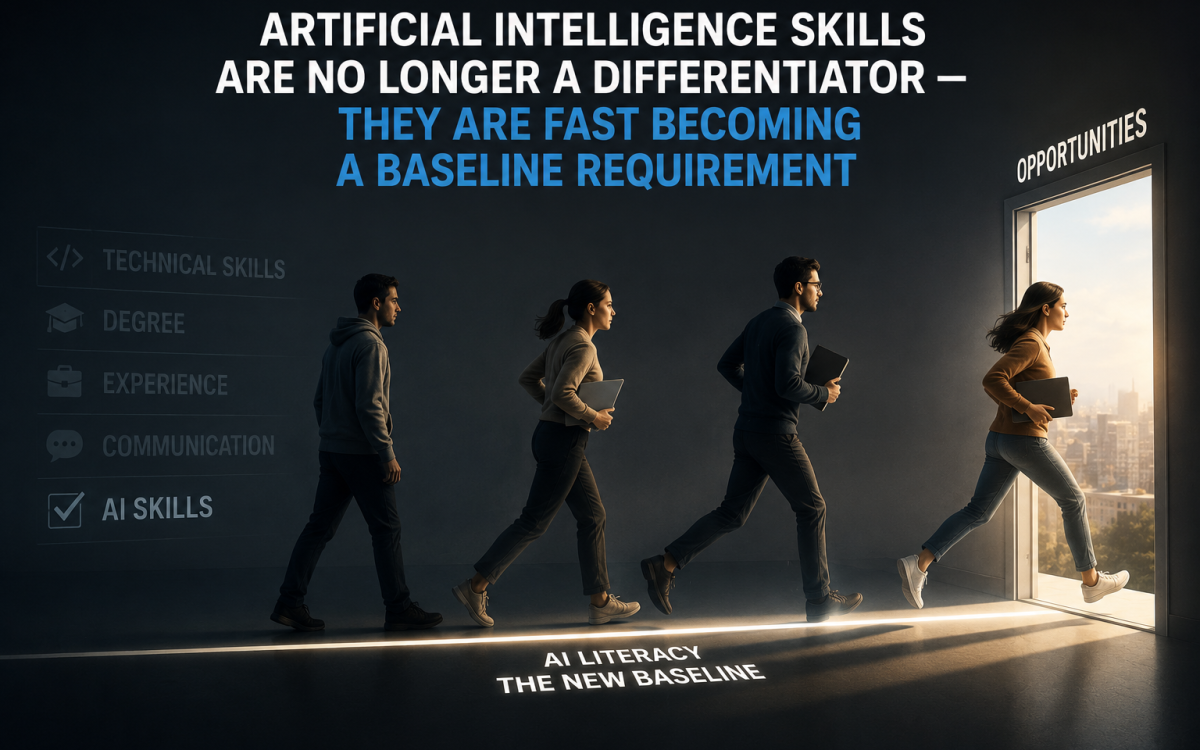
Artificial intelligence skills are no longer a differentiator — they are fast becoming a baseline requirement. Across Romania and the broader European Union, employers in sectors ranging from fintech to manufacturing are competing for professionals who can demonstrate practical AI competency through recognized credentials. But with dozens of programs on the market, which ones genuinely move the needle in salary negotiations?
The European Context: Regulation Meets Demand
The EU AI Act, which entered into force in 2024, has created a structural push for AI literacy within organizations operating in Europe. Companies must now document, audit, and in some cases certify AI systems used in high-risk contexts — and they need people who understand both the technical and compliance dimensions of that work. Romania, home to a technology workforce of more than 130,000 professionals and growing engineering hubs in Bucharest, Cluj-Napoca, Iași, and Timișoara, sits at an interesting crossroads: relatively low labor costs compared to Western Europe, but with skill sets increasingly aligned to global standards.
According to aggregated data from LinkedIn and local job platforms, Romanian job postings explicitly requiring AI-related competencies grew by more than 60% between 2023 and 2024. The certifications that appear most frequently in recruiter requirements cluster around three ecosystems: Google Cloud, Microsoft Azure, and self-directed learning programs such as Fast.ai and Coursera specializations.
The Leading Certification Programs Ranked
1. Google Cloud Professional Machine Learning Engineer
This credential is widely regarded as the most technically rigorous cloud-native ML certification available. Preparation materials are available through Google Cloud Skills Boost, which offers structured learning paths combining video content with hands-on labs running on actual Google Cloud infrastructure. Candidates typically spend three to six months preparing, assuming a working knowledge of Python and foundational statistics. The exam fee is approximately 200 USD, and the certification is valid for two years. For professionals targeting roles at multinationals or cloud-first tech companies, this is arguably the highest-signal credential available in 2025.
2. Microsoft Azure AI Engineer Associate (AI-102)
Microsoft’s AI-102 exam certifies proficiency in designing and implementing AI solutions using Azure Cognitive Services, Azure OpenAI Service, and related tools. Because Microsoft’s enterprise footprint in Romania and across Central and Eastern Europe is exceptionally deep, this certification carries strong practical relevance — hiring managers in banking, insurance, and large retail groups frequently list it as a preferred qualification. Preparation paths are largely free through Microsoft Learn, and the exam costs around 165 USD. The certification is particularly well suited to professionals moving from traditional software development into AI-adjacent roles.
3. Fast.ai – Practical Deep Learning for Coders
Fast.ai occupies a different category: it is free, unproctored, and does not produce a formal credential that appears on a resume. What it does produce, when completed seriously, is genuine working knowledge. The course’s top-down pedagogy — running real models before unpacking the mathematics — has earned it a devoted following in the global ML community. For engineers building GitHub portfolios and preparing for technical interviews, completing Fast.ai’s curriculum and shipping several project repositories can be more persuasive than a certificate from a lesser-known commercial provider.
4. Coursera – DeepLearning.AI and IBM AI Engineering
Andrew Ng’s Deep Learning Specialization, hosted on Coursera through DeepLearning.AI, and the IBM AI Engineering Professional Certificate remain two of the most cited credentials in European job postings for mid-level AI roles. Both can be completed in four to six months at a pace of eight to ten hours per week. A Coursera Plus subscription costs approximately 59 USD per month, though individual courses can be audited for free. The certificates are issued jointly by the platform and the content partner, which adds institutional weight recognized by many European HR departments.
Salary Expectations: What the Numbers Say
The financial case for AI certification is straightforward. A mid-level ML engineer in Bucharest or Cluj-Napoca with two to three years of experience and a Google Cloud or Microsoft Azure AI certification can expect a gross monthly salary in the range of 1,750 to 3,100 EUR — a figure that competes favorably with equivalent roles in Warsaw or Prague. Senior professionals specializing in MLOps, model governance, or large language model fine-tuning command even higher packages, often exceeding 4,500 EUR gross per month, with some remote positions at Western European rates pushing significantly beyond that threshold.
It is worth noting that Google and Microsoft both run periodic voucher programs offering 50% discounts or free exam retakes for students, recent graduates, and participants in partner training programs. Tracking these promotions on official program pages can reduce the total cost of certification substantially.
Conclusion: Choose Based on Your Stack, Not on Hype
The honest advice for Romanian professionals navigating this landscape is to align certification choice with the technical environment they already work in or are targeting. Azure AI-102 delivers the fastest return on investment for those embedded in Microsoft-heavy organizations. Google Cloud’s ML Engineer certification is the stronger signal for roles at cloud-native companies and scale-ups. Fast.ai and Coursera specializations offer the most accessible on-ramps for self-directed learners building toward their first AI role.
What is no longer defensible, in a European job market reshaped by the AI Act and a genuine surge in enterprise AI adoption, is the absence of any structured AI credential at all. The window to get ahead of this curve is narrowing — but it has not closed yet.
AI-assisted article, editorially reviewed — news4tech.eu